
Cognac Color: HEX Codes, Palettes, and Paint Mixing

Cognac color sits in that useful space where brown feels warmer, red feels earthier, and orange becomes restrained. The name looks simple until a screen swatch, leather chair, and paint mixture refuse to match. This guide gives you a dependable digital starting point, clear comparisons, workable palettes, and a practical way to specify cognac across materials.
What Color Is Cognac?
Cognac is a warm reddish-brown color family. Depending on the reference or material, it may lean toward muted red, amber, orange-brown, or a deeper earthy brown. It is darker and redder than typical tan, yet usually warmer and less neutral than a plain dark brown.
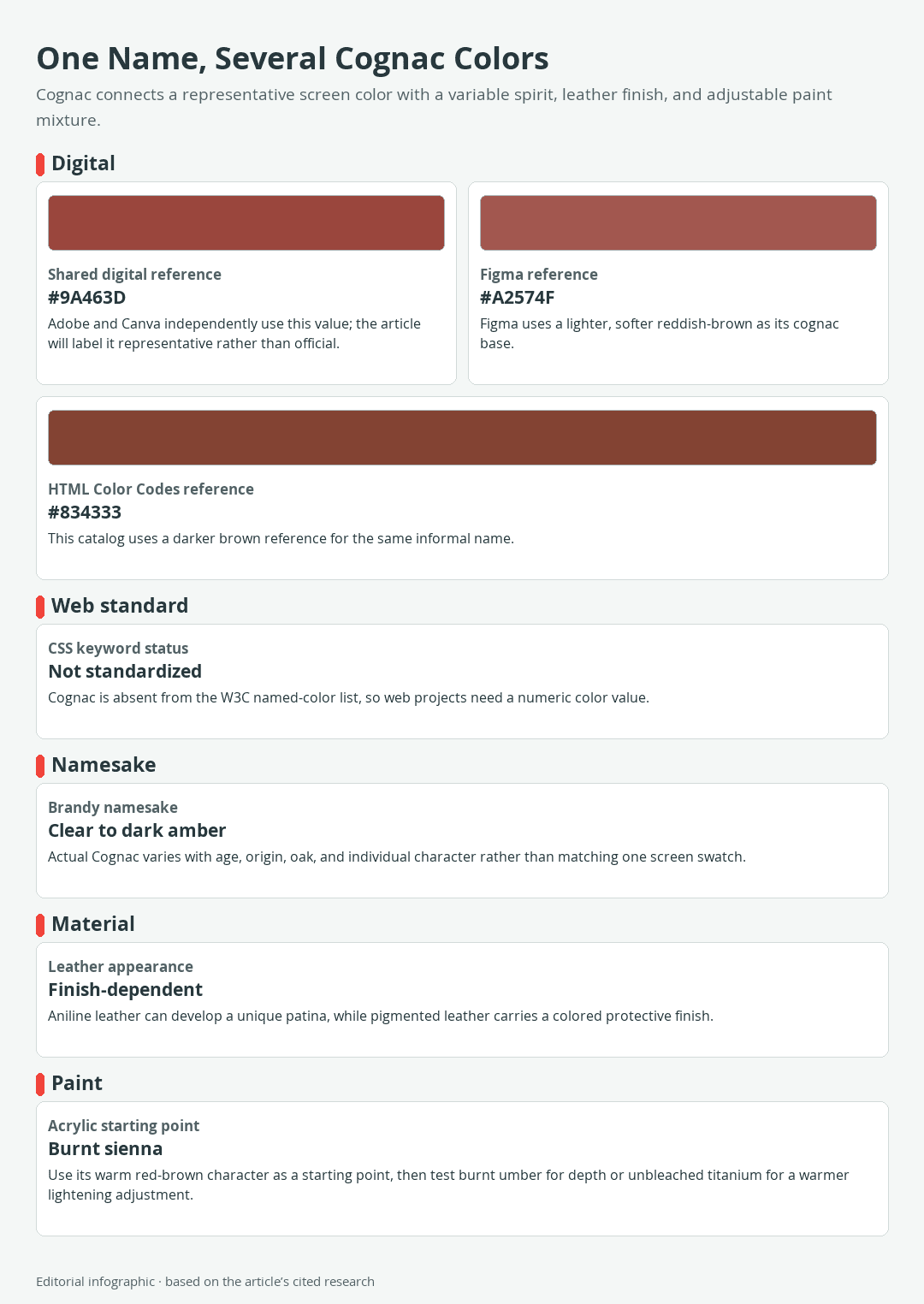
Download the complete color reference sheet (PNG): One Name, Several Cognac Colors (PNG)
For digital projects, #9A463D is a useful representative cognac. Both Adobe and Canva associate that value with the name, but it is not an official or universal definition. Other established design catalogs use noticeably different values.
A Representative Cognac HEX Code
| Name | HEX | RGB | Color |
|---|---|---|---|
| Adobe/Canva Cognac | #9A463D | 154, 70, 61 | |
| Figma Cognac | #A2574F | 162, 87, 79 | |
| HTML Color Codes Cognac | #834333 | 131, 67, 51 |
The first row controls the digital examples in this guide. The other two rows show the real range hidden behind the name: Figma’s version is lighter and softer, while the HTML Color Codes version is darker and browner.
Why Cognac HEX Codes Differ
Cognac is a descriptive color name, not a W3C standardized CSS named-color keyword. A browser will not recognize color: cognac. Web designers must enter a numeric specification such as #9A463D.
A six-digit CSS HEX value identifies a precise color in the sRGB color space. The word cognac, by contrast, describes a broader visual family. Different publishers can therefore attach different HEX values to the same informal name without changing what those numerical values mean.
Choose one reference at the beginning of a project and record its HEX value. That prevents a design team from quietly moving among several versions of cognac merely because each asset carries the same color label.
Where the Cognac Color Name Comes From
The Brandy Namesake
The color takes its name from Cognac brandy, but the drink does not provide a fixed master swatch. The official Cognac trade organization describes the spirit’s appearance as ranging from clear to dark amber. Age, origin, oak, and the individual character of a Cognac all influence what appears in the glass.
 AI-generated editorial illustration; not a measured color sample.
Color develops during aging in oak. The origin and grain of the oak, cellar humidity, and barrel age are among the conditions that affect maturation. A reddish-brown design color can evoke the drink’s warm amber end, but it should not be treated as a measured copy of every Cognac.
Contemporary design writing sometimes connects cognac with refinement, maturity, wealth, or luxury. Those are branding conventions shaped by context, especially associations with aged spirits and leather goods. They are not universal psychological effects.
Why Cognac Leather Is Not One Fixed Color
“Cognac leather” uses a color-family label rather than this article’s numeric sRGB specification. The label alone does not identify a fixed HEX value or a particular leather finish.
Aniline leather has no pigment finish and can develop an individual patina. Pigmented leather has a protective finish that adds color or surface effects. Those documented finish categories are distinct even when products share the same cognac color-family label.
Cognac Color vs. Similar Browns
Standardized CSS colors provide useful digital landmarks around the informal cognac family. They do not define its boundaries, but they make visual comparison more precise.
| Name | HEX | RGB | Color |
|---|---|---|---|
| Representative Cognac | #9A463D | 154, 70, 61 | |
| Tan | #D2B48C | 210, 180, 140 | |
| Sienna | #A0522D | 160, 82, 45 | |
| Saddle Brown | #8B4513 | 139, 69, 19 | |
| Chocolate | #D2691E | 210, 105, 30 |
Cognac vs. Tan
Tan is substantially lighter and more subdued. It works like a pale neutral, while representative cognac has greater red-brown depth. If a sample resembles beige or light camel from a distance, it is probably closer to tan than to the reference used here.
Cognac vs. Sienna, Saddle Brown, and Chocolate
CSS Sienna is close in overall depth but leans more strongly toward orange. Saddle Brown is darker and places more emphasis on deep orange-brown. Chocolate is brighter and considerably more orange than representative cognac. Cognac’s muted red component gives it a slightly wine-like cast beside these warmer orange-browns.
These comparisons concern standardized screen values. CSS Sienna is a browser color keyword, not a specification for physical sienna pigment. Multiword CSS tokens also omit spaces, so Saddle Brown is written as saddlebrown in a style sheet.
Colors That Go With Cognac
Light neutrals give cognac room to read as a distinct warm brown. Dark green and deep blue introduce cooler contrast, while a quieter blue can distribute the visual weight across a larger composition. The following palettes are original design examples, not claims about universal color psychology.
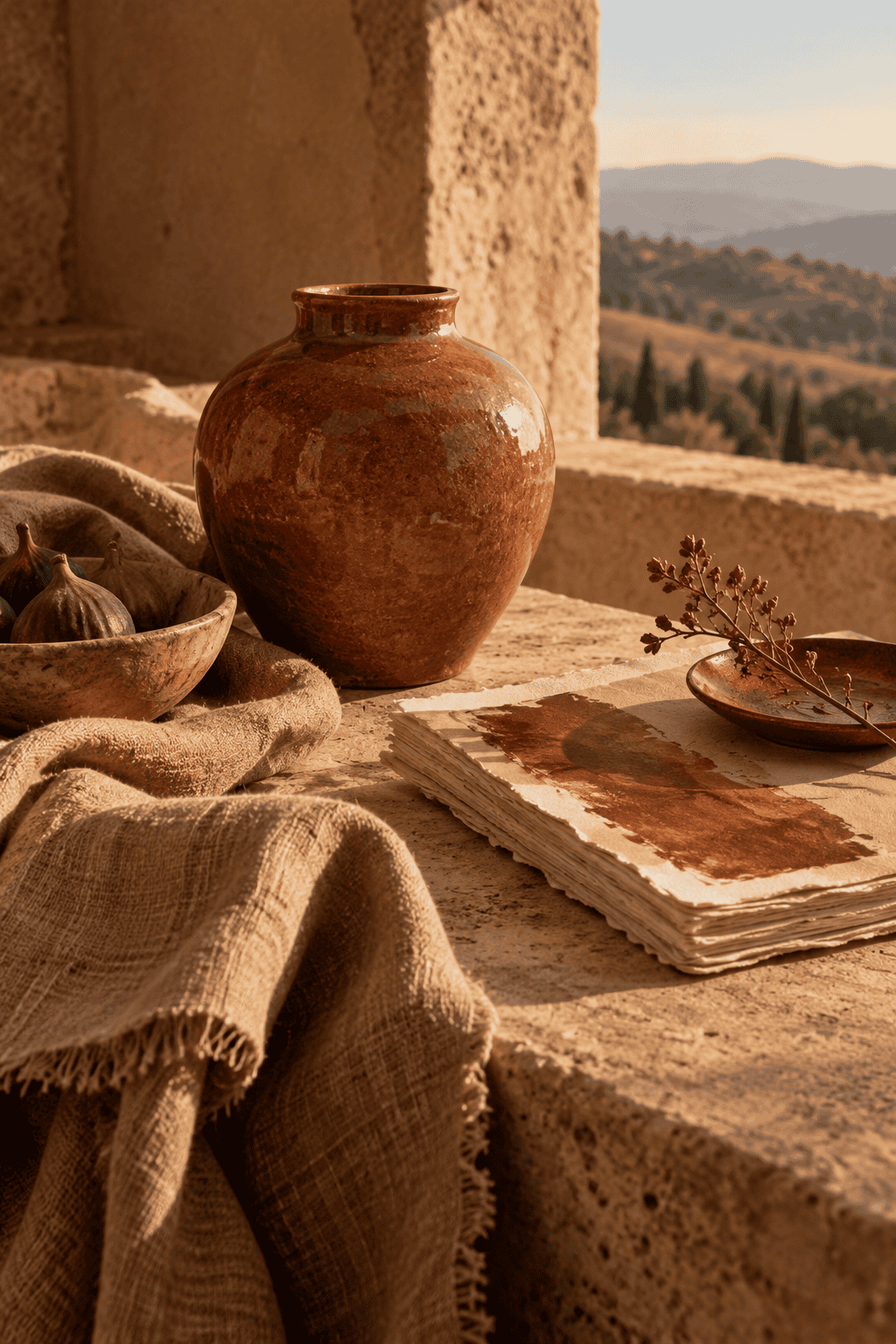 AI-generated editorial illustration; not a measured color sample.
Airy Classic: Cognac With Linen and Navy
Use linen across the largest area, cognac for furniture, cabinetry, packaging, or headings, and navy for small high-impact details. The pale background preserves separation without the starkness of pure white.
| Name | HEX | RGB | Color |
|---|---|---|---|
| Linen (dominant) | #FAF0E6 | 250, 240, 230 | |
| Cognac (supporting) | #9A463D | 154, 70, 61 | |
| Navy (accent) | #000080 | 0, 0, 128 |
Earthy Contrast: Cognac With Ivory and Dark Olive Green
Ivory keeps the palette light, cognac supplies warmth, and dark olive green adds a grounded cooler note. In a room, this might translate to ivory walls, cognac upholstery, and restrained green textiles or painted details.
| Name | HEX | RGB | Color |
|---|---|---|---|
| Ivory (dominant) | #FFFFF0 | 255, 255, 240 | |
| Cognac (supporting) | #9A463D | 154, 70, 61 | |
| Dark Olive Green (accent) | #556B2F | 85, 107, 47 |
Cool Balance: Cognac With Linen and Steel Blue
Steel blue can occupy more space than a very dark accent, making this palette useful when the composition needs a visible cool counterweight. Keep cognac in the smallest role when you want it to act as a warm focal point.
| Name | HEX | RGB | Color |
|---|---|---|---|
| Linen (dominant) | #FAF0E6 | 250, 240, 230 | |
| Steel Blue (supporting) | #4682B4 | 70, 130, 180 | |
| Cognac (accent) | #9A463D | 154, 70, 61 |
How to Mix a Cognac-Like Paint Color
A six-digit HEX value specifies an sRGB color, not a physical paint formula. Use #9A463D as a visual direction, then build and compare a small acrylic test mixture for the intended project.
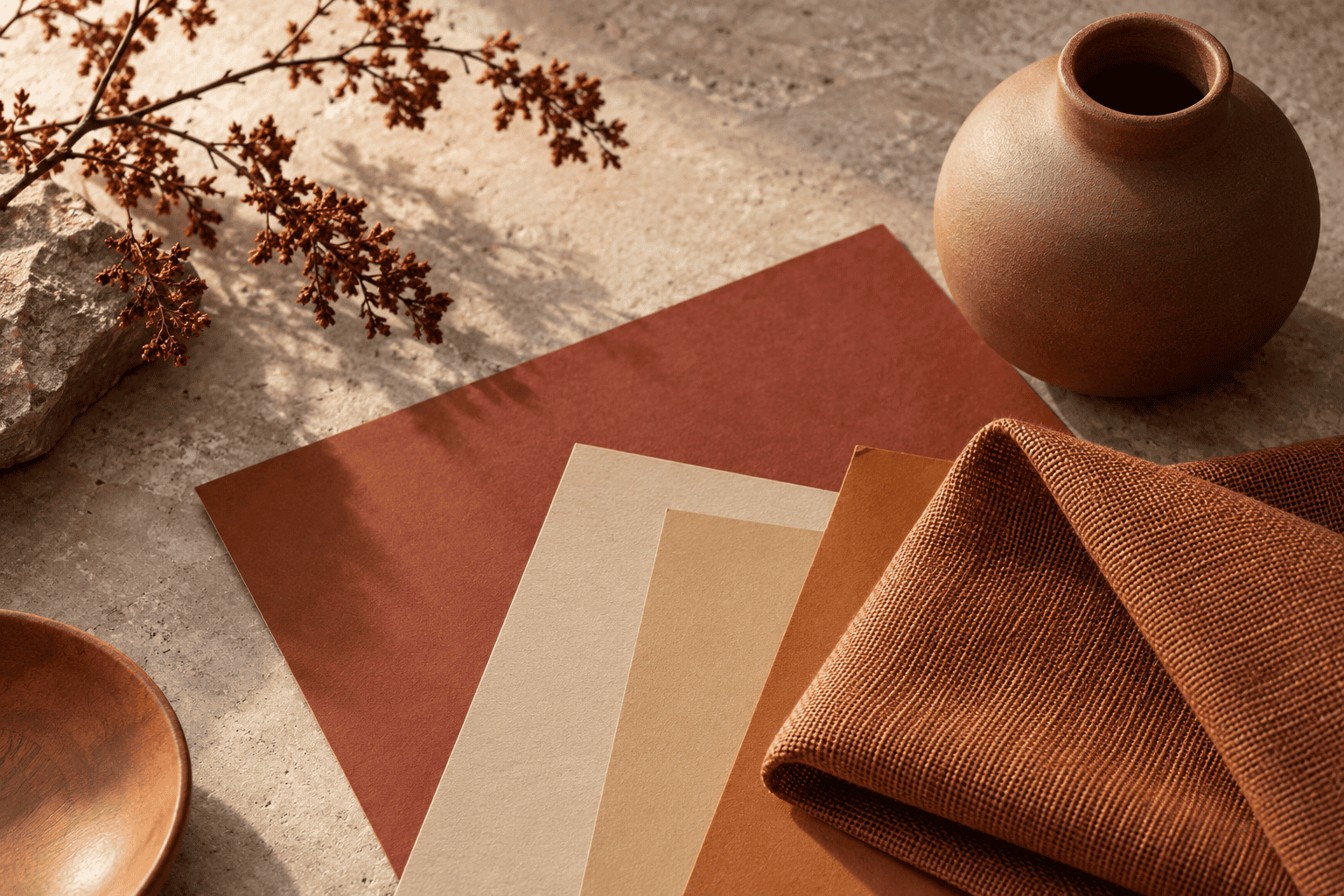 AI-generated editorial illustration; not a measured color sample.
A Warm Red-Brown Starting Point
Begin with a warm red-brown such as burnt sienna. It already occupies useful territory for a cognac-like mixture, but it is a starting point rather than an exact substitute for #9A463D.
Make a small test swatch and let it dry according to the product instructions before comparing it with the color you want.
How to Adjust the Mixture
- Too orange or too bright: Add burnt umber in very small increments to introduce richer brown depth.
- Too dark: Test unbleached titanium, a warm creamy off-white that can lighten brown while retaining warmth.
- Too dull: Return to the burnt sienna base gradually instead of adding several new colors at once.
- Close but not convincing: Compare the completed test swatch where the finished work will be displayed.
Record the exact product names and each adjustment so you can repeat the tested mixture.
Why There Is No Universal Paint Recipe
HEX provides no pigment list or physical mixing ratio. Burnt sienna, burnt umber, and unbleached titanium offer a practical test-and-adjust route, but they do not convert #9A463D into a guaranteed material result.
Work in a small batch before committing to a large surface, and follow each paint label’s instructions for handling, drying, and compatible uses.
Using Cognac Across Screens, Print, and Leather
Digital and Web Design
Use #9A463D when you need to reproduce this article’s representative cognac in an sRGB web project. Save the numeric value in the design system rather than relying on the informal color name.
Print and Painted Surfaces
HEX specifies an sRGB screen color, not ink or paint. This guide therefore gives no unprofiled CMYK conversion or fixed paint formula.
For print, approve a production-specific proof. For a painted surface, compare a completed test made with the products and surface intended for the project.
Leather, Finish, and Patina
Do not assume that a cognac product label promises a match to #9A463D. Check whether the leather is described as aniline or pigmented and evaluate the relevant material sample.
Aniline leather has no pigment finish and can develop an individual patina. Pigmented leather has a protective finish that adds color or surface effects. Some leather-care products can darken the color, so follow the maker’s directions and patch test when advised.
Accessibility Checks
A pleasing palette is not automatically a readable interface. WCAG guidance sets a minimum contrast ratio of 4.5:1 for ordinary text and 3:1 for large text. Large text is at least 18pt when regular or 14pt when bold.
Test the actual foreground and background values for every text use, including buttons, hover states, labels, and text placed over photographs. Do not approve a combination merely because one color looks light and the other looks dark. Cognac can remain a strong brand or accent color even when a tested text application requires a different foreground, background, weight, or size.
The reliable specification depends on the medium: save the HEX value for digital work, approve a proof for print, create a test for paint, and inspect the relevant leather finish. The shared name establishes a visual direction, while the numeric value or approved physical sample establishes what should be reproduced.

Learn more about Israel Benloulou and about us.